Process
Veggie production: from vegetable to finished mix
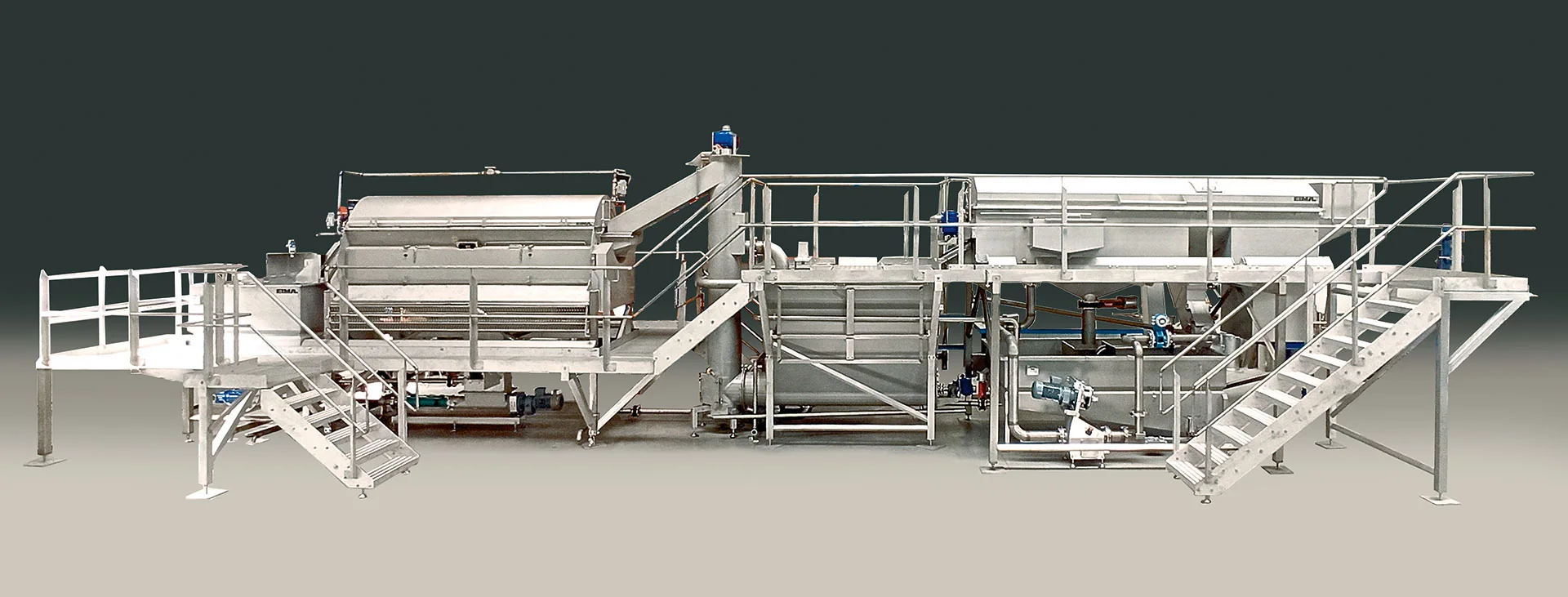
EIMA covers eight processes; we plan four more with partners. Which ones a product needs depends on whether the end result is a burger, a salad, a purée or frozen product.
-
1
Destoning
Field-run vegetables bring stones and clods of soil with them.
-
2
Washing
Clean raw material is the foundation of every veggie product.
-
3
Peeling
How much vegetable is lost in peeling determines the yield.
-
4
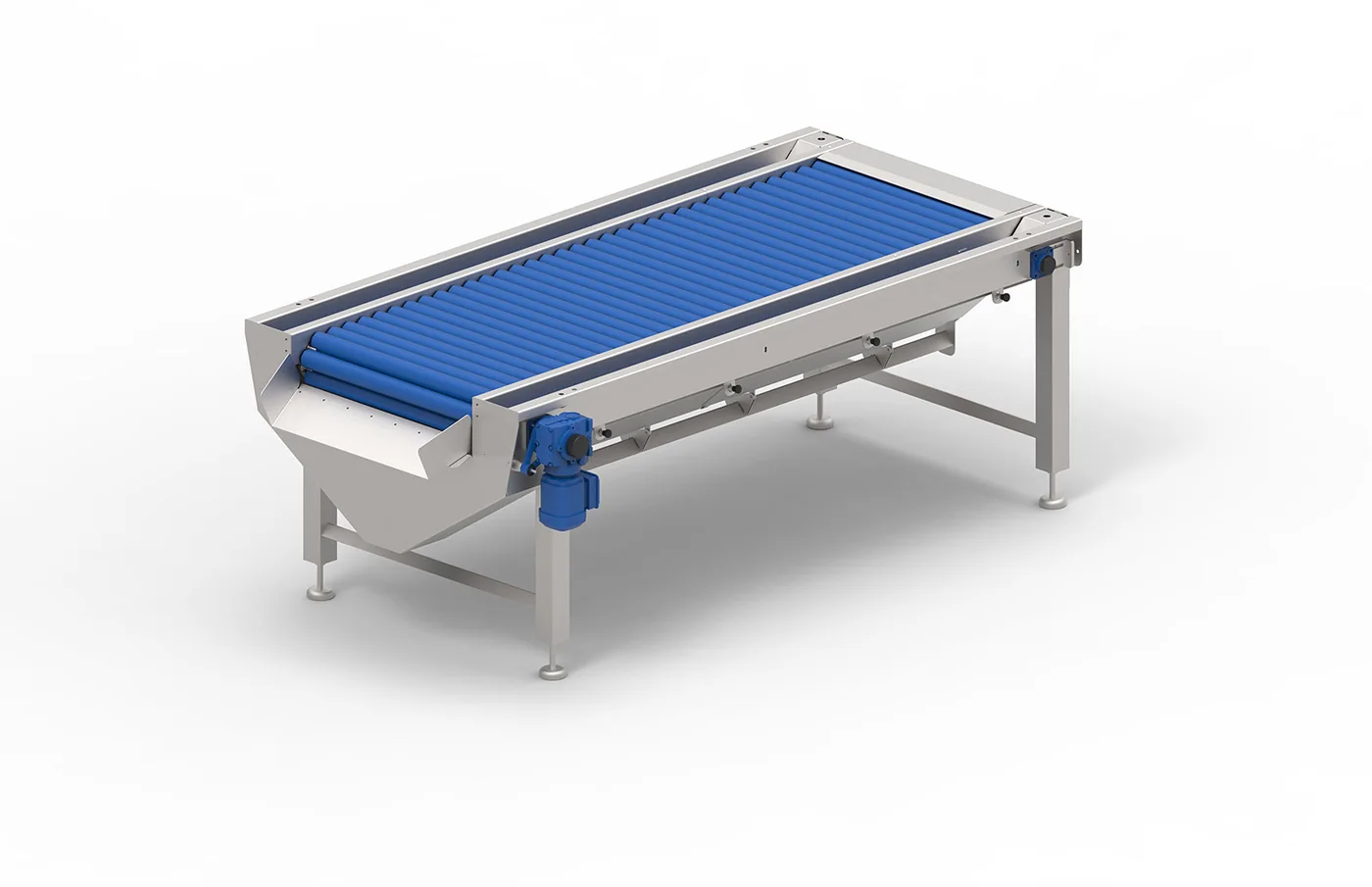
Inspection
Before cooking or mixing, pieces with peel residues, bruises or foreign bodies are sorted out by hand.
-
5
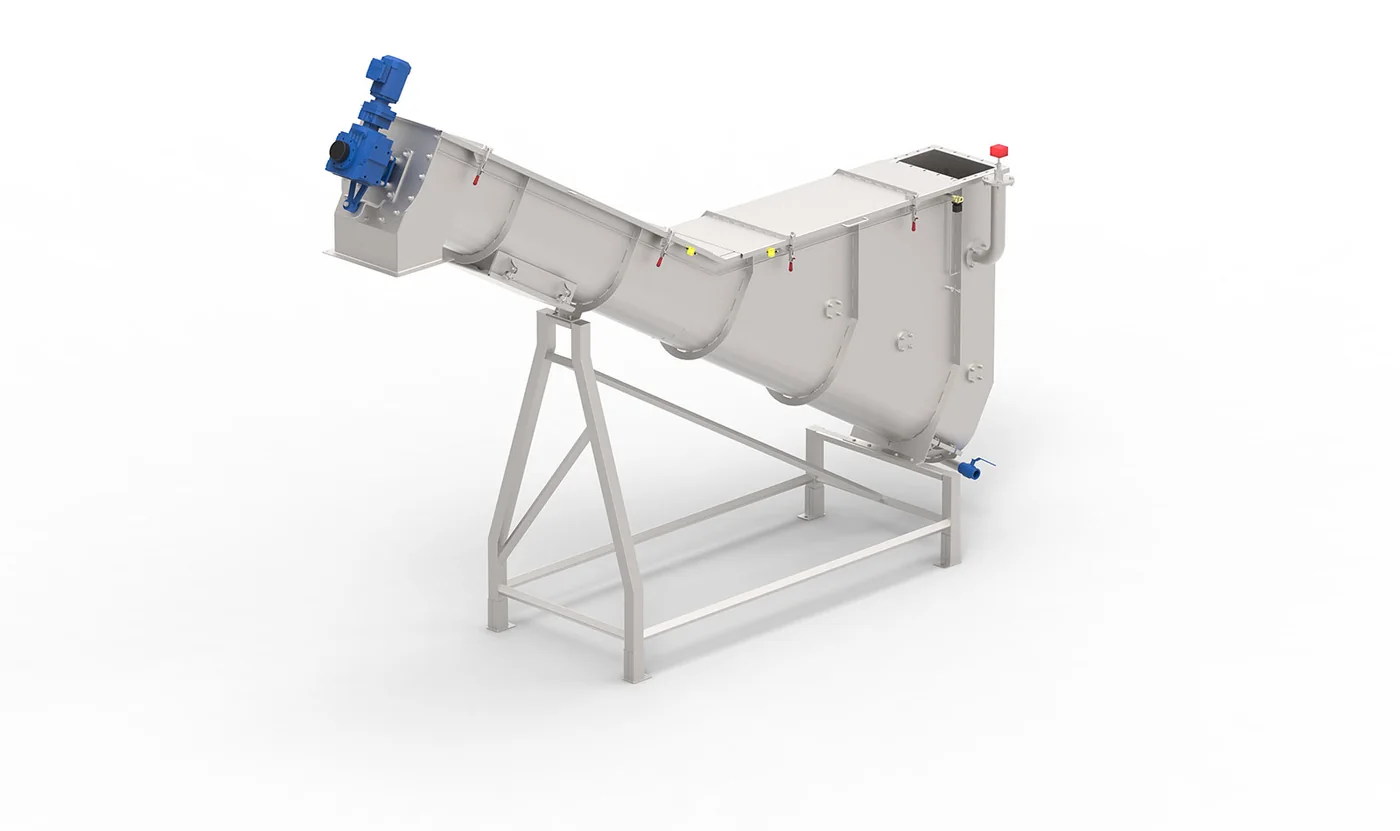
Blanching
Blanching stops the enzymes that degrade colour and flavour.
-
6
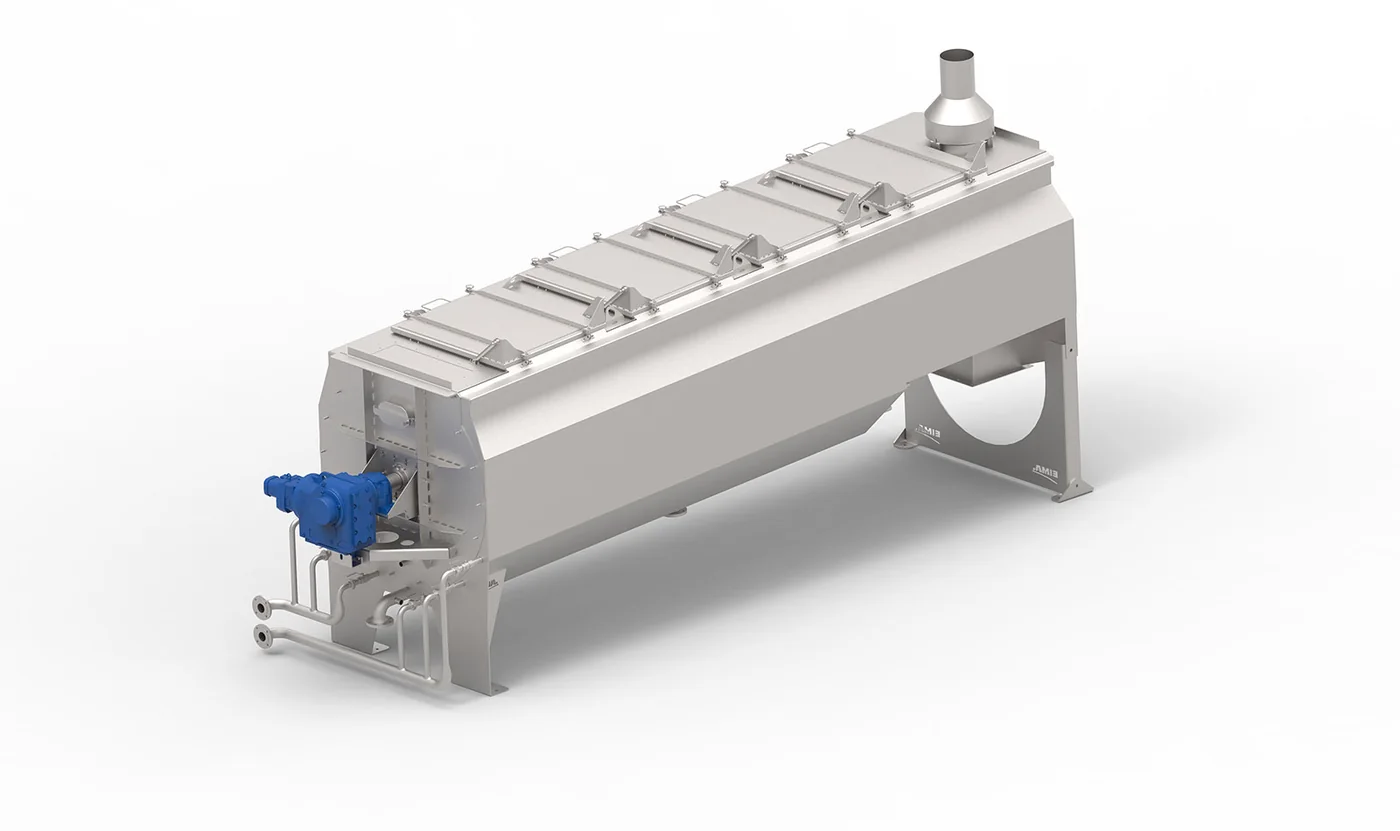
Cooking
For patty mixes, purées and salads, vegetables are cooked.
-
7
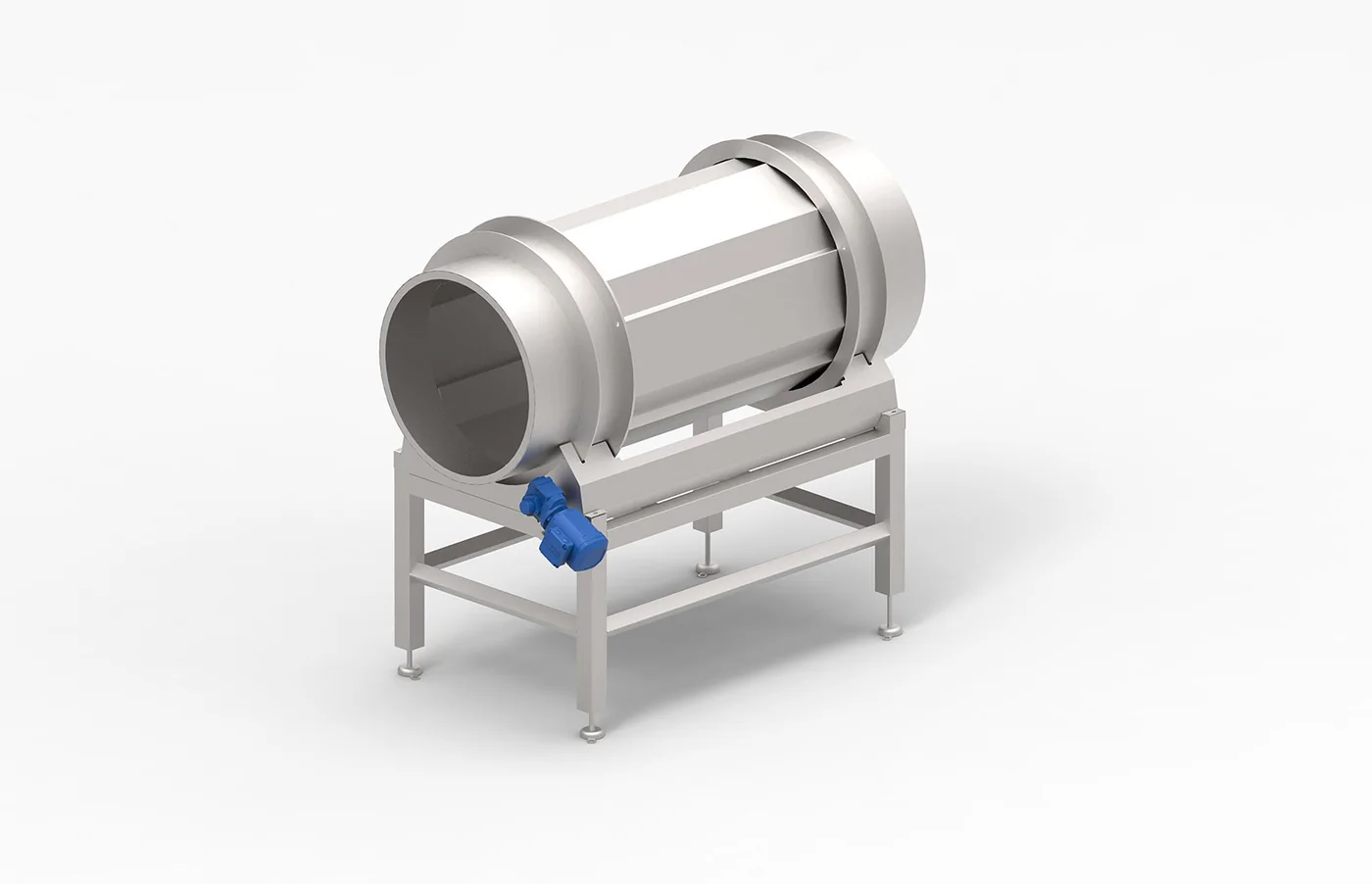
Mixing
This is where the actual veggie product is created: vegetables are mixed with spices, binders and other ingredients into a salad, a filling or a formable mix.
-
8
Preserving
Peeled and cut convenience vegetables are preserved before they are chilled and packed.
Swipe sideways to read on.
Destoning
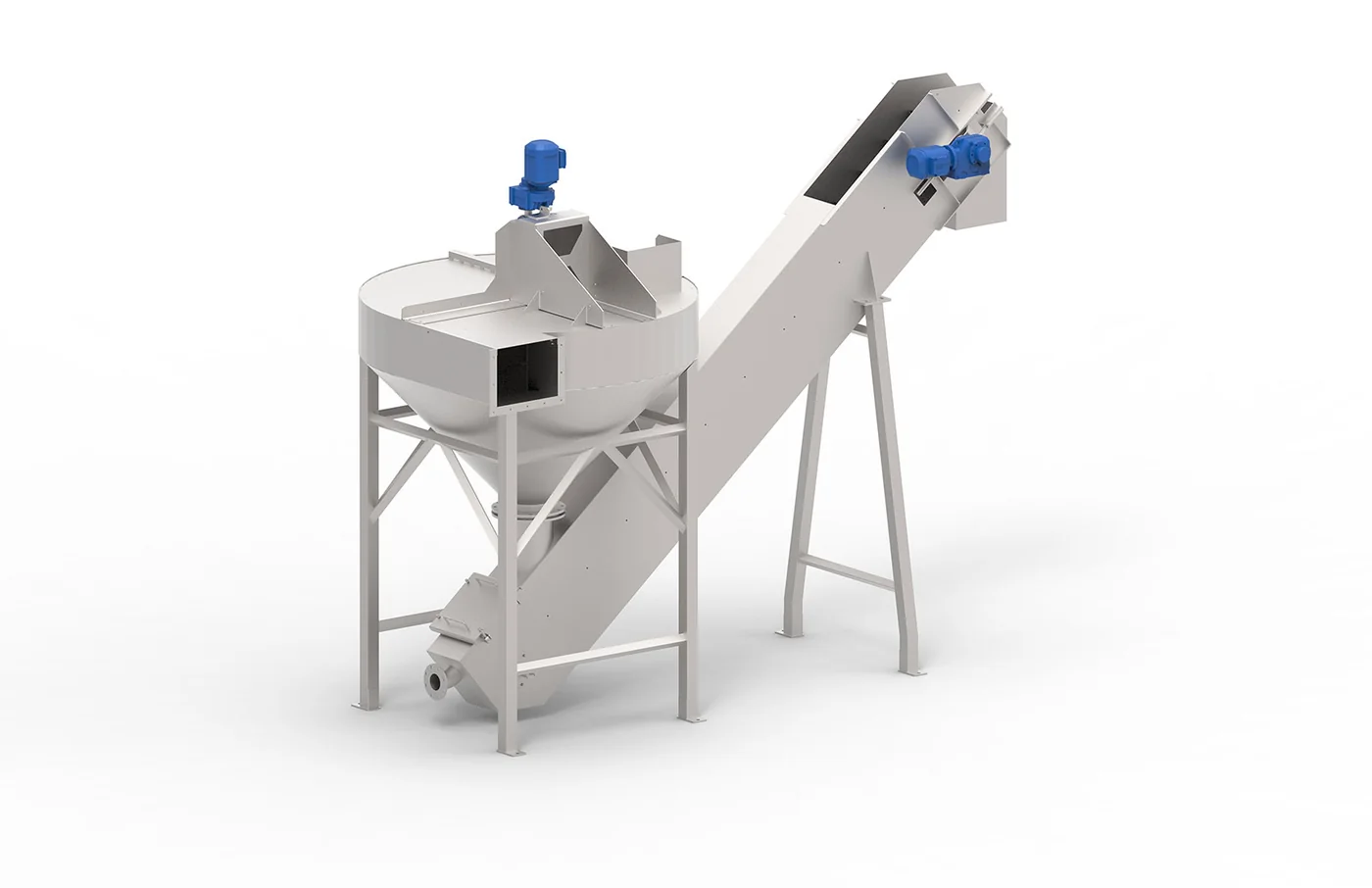
Field-run vegetables bring stones and clods of soil with them. If these are removed early, peelers, pumps and later the raw mix stay free of foreign bodies.
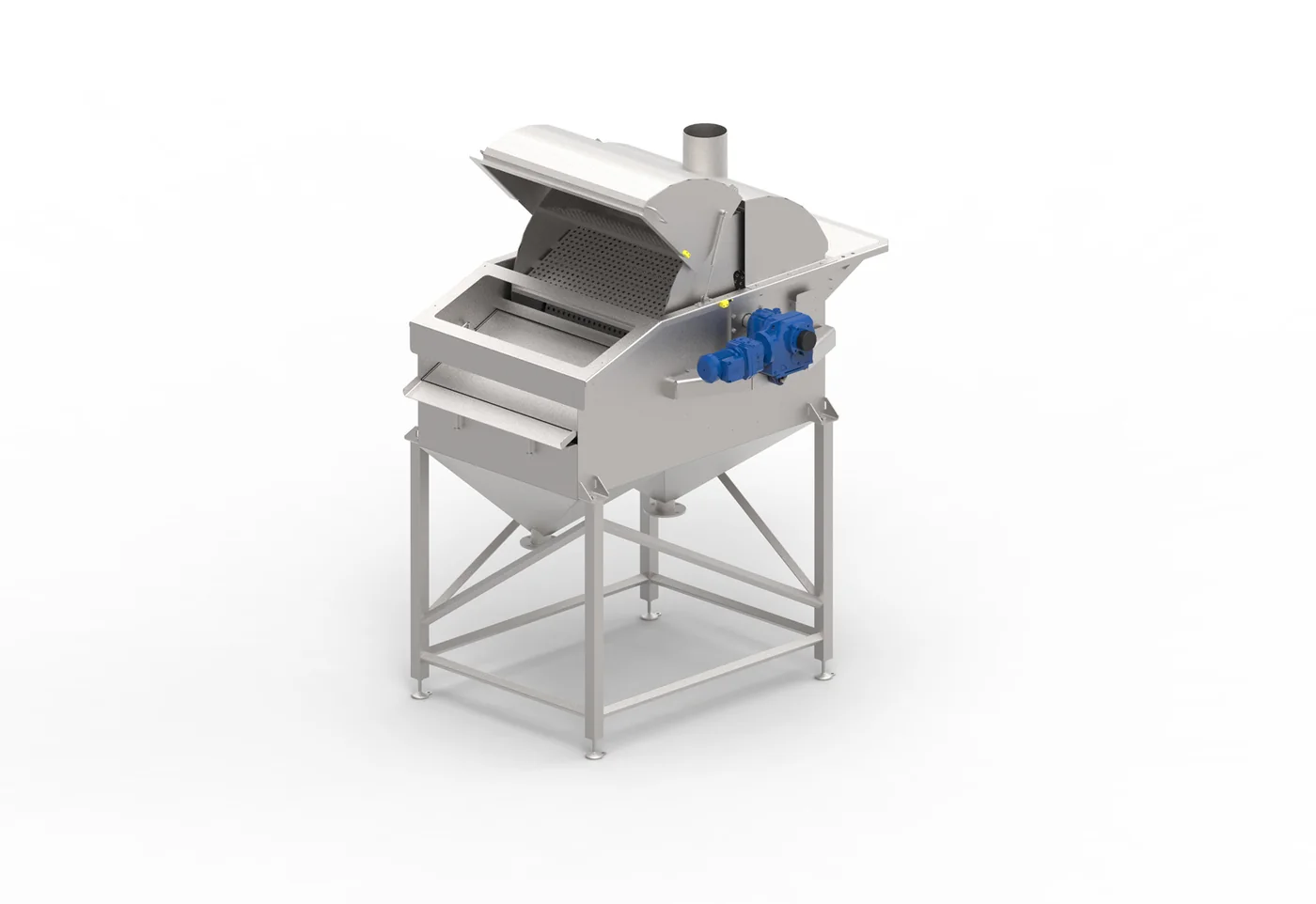
- Cyclone stone separatorFor large volumes of field-run produce: stones stay behind in the water before they reach the peeling rollers or the later mix.
- Combination washerFor small halls: de-earthing, destoning and washing in one machine, at the start of a compact veggie line.
Washing
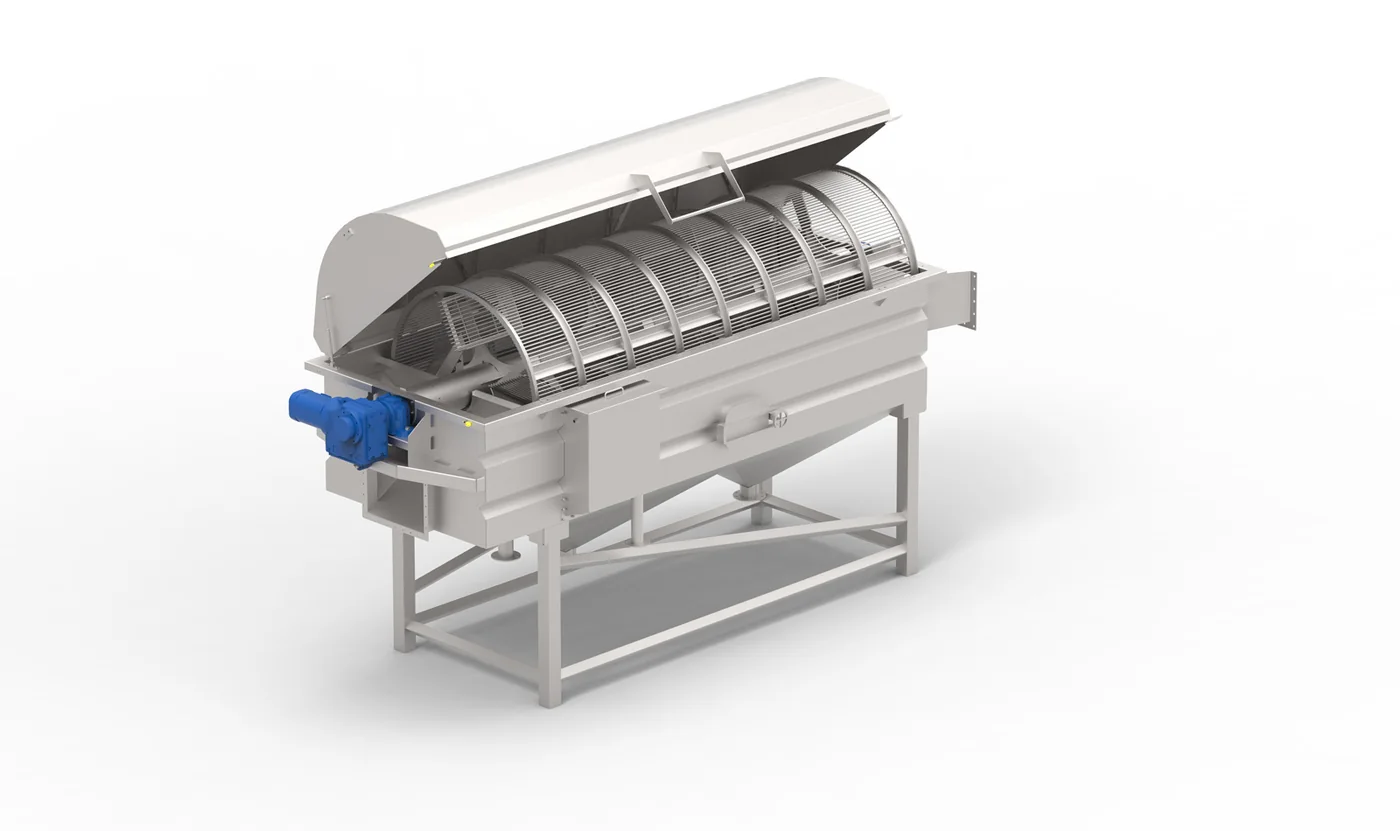
Clean raw material is the foundation of every veggie product. Depending on soil adhesion, vegetables are dry de-earthed, washed in a full bath or given a spray rinse after peeling.
- Full-bath washerFor beetroot, carrots or celeriac with a lot of soil. Whatever stays on here ends up in the product later.
- Spray washerRinses off peel residues and starch after peeling so none of it gets into salad or purée.
For example for: Veggie burgers & patties, Deli & salads, Convenience vegetables, Frozen vegetables, Vegetable purée & spreads
All designs and technical data on eima.dePeeling
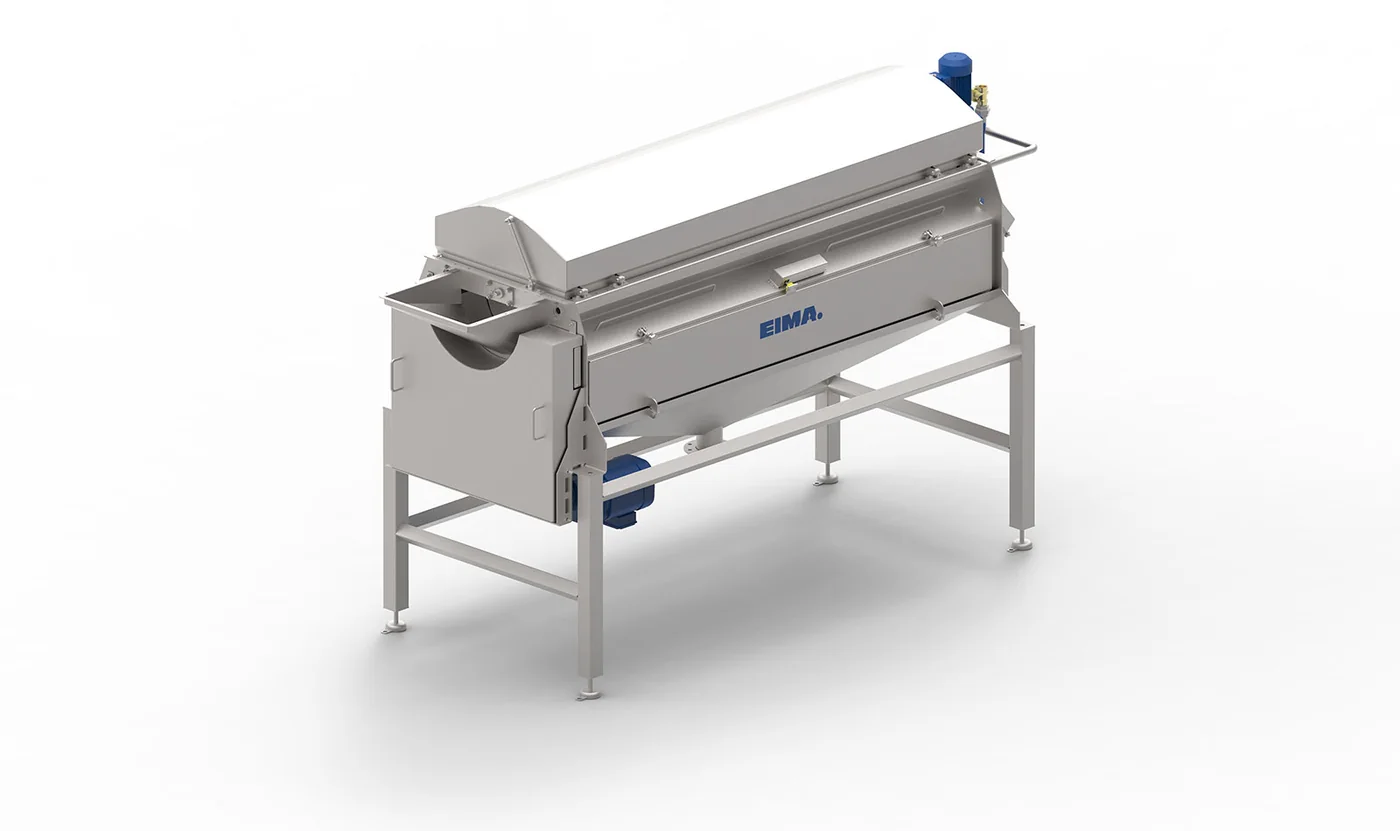
How much vegetable is lost in peeling determines the yield. Elongated produce such as carrots and round tubers such as celeriac need different methods.
- Roller peelerFor carrots and tubers. The less is removed in peeling, the more vegetable is left for the product.
- Batch peelerFor round, irregular tubers such as celeriac, which turn in the bowl and are peeled all round.
- Steam peelerPeels batch-wise with steam, with low peeling loss at high capacity, so more raw material is left for the product.
For example for: Veggie burgers & patties, Deli & salads, Convenience vegetables, Frozen vegetables, Vegetable purée & spreads
All designs and technical data on eima.deInspection
Before cooking or mixing, pieces with peel residues, bruises or foreign bodies are sorted out by hand.
- Inspection tableThis is where your staff sort out pieces with bruises or peel residues before they go into the mix or salad.
- Roller inspection tableEvery piece is turned, so defects on the underside are spotted too. Suited to round produce such as beetroot.
For example for: Convenience vegetables
All designs and technical data on eima.deBlanching
Blanching stops the enzymes that degrade colour and flavour. For frozen vegetables and many convenience products it is mandatory.
- Screw blancherEvery piece stays in the hot water for the same time, keeping colour and bite consistent in frozen vegetables and convenience products.
- Drum blancherTurns the product gently. Good for cut or soft pieces that should not fall apart.
- Horizontal blancherFor frozen vegetables in large volumes where the hall has little height.
For example for: Frozen vegetables
All designs and technical data on eima.deCooking
For patty mixes, purées and salads, vegetables are cooked. Continuous steam cooking makes sure every piece becomes equally tender.
- Steam cookerCooks without batches or waiting times and passes the vegetables on continuously to the mixer or cooling.
For example for: Veggie burgers & patties, Deli & salads, Convenience vegetables, Vegetable purée & spreads
All designs and technical data on eima.deMixing
This is where the actual veggie product is created: vegetables are mixed with spices, binders and other ingredients into a salad, a filling or a formable mix.
- Horizontal mixerFor formable mixes: vegetables, binders and spices are distributed evenly, the basis for burgers and patties.
- Salad mixerFolds in dressing and ingredients without crushing the vegetable pieces. For delicatessen and salads.
- Seasoning drumSeasons vegetable pieces evenly all round, for example for seasoned convenience products.
For example for: Veggie burgers & patties, Deli & salads, Vegetable purée & spreads
All designs and technical data on eima.dePreserving
Peeled and cut convenience vegetables are preserved before they are chilled and packed.
- Sterilisation bathFor cut vegetables that should keep longer when chilled: the product runs through the tempered bath on a belt.
- Sterilisation screwThe compact design when space in the convenience line is tight.
For example for: Convenience vegetables
All designs and technical data on eima.deWhat partners take on
Forming, frying, freezing and packaging come from specialised manufacturers. EIMA includes the handovers to them in the 3D model.
Forming
Burgers, patties and balls are formed from the mix on forming machines.
Frying and baking
Pre-fried or baked products pass through belt fryers or ovens.
Chilling and freezing
Chilled and frozen products are cooled down or frozen quickly.
Packaging
Vacuum, tray or pouch packaging, depending on the product and the retailer.

All machines with technical dataCapacity, connected load and consumption of every machine are on eima.de, sorted by process step.
Process chain on eima.deContact our sales team
Leave your details and our Technical Sales team will get back to you.